
I’m excited to use mountain camp method this year to feed my bees through the winter. The summer has ended and fall is here. That means that the bees are not going out as often to forage as they did during the summer. One reason is that bees cannot fly when the temperature is at or under 50 degrees. Any bee that goes out too far might get too stiff from the cold and be unable to make it back to the hive. Another reason is that most flowers have been foraged and are losing their blooms.
This is when I have to make sure that my bees are not going to run out of food. Some people pull their honey supers in June and July and then let the bees refill them for their own supply to get through winter. Last year and the year before, I pulled the supers off, but left two brood boxes on, which had ample amounts of honey stored, and then I fed them 2:1 sugar syrup until they were done taking anymore of it. Lastly, I placed HiveAlive fondant on the inner cover with a hole cut open for the bees to access from inside the hive.
But this year I plan to use mountain camp method for feeding the bees, and here’s why: moisture control. I live in the northern climate where the winters get brutally cold. Last year 3 hives didn’t make it through the winter, and I think it could have been due to moisture inside, causing the bees to freeze suddenly. They had plenty of food and they weren’t even clustered together, but they just stopped moving. It looked like they were frozen in the middle of living their life moving about inside the hive. One guess that I came up with is they might have been warm in the hive and the when the sun went down, they froze. Maybe too much humidity inside the hive?
Use Mountain Camp Method
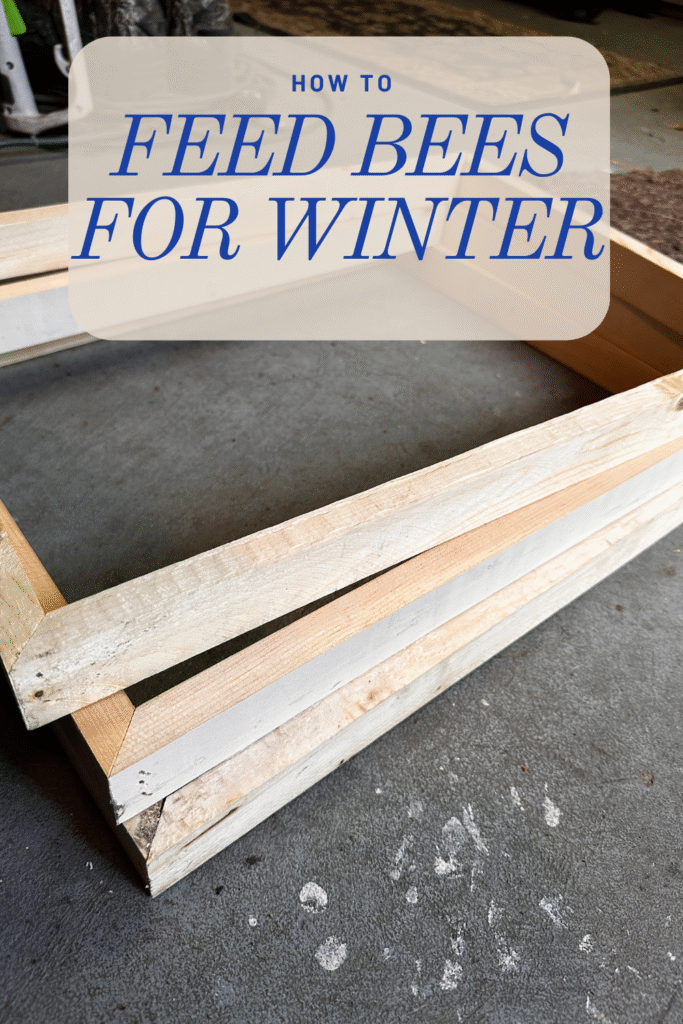
The method I’m going to try this year is the mountain camp method. This method got its name from a user named “Mountain Camp” who introduced it on BeeSource.com, a beekeeping forum. For this method of feeding, a 1-inch wooden shim, which you can buy online, but my husband built ours (pictured above), or a shallow super is placed on top of the open hive, then a sheet of newspaper is placed on top of the frames, and dry sugar is poured onto the newspaper.
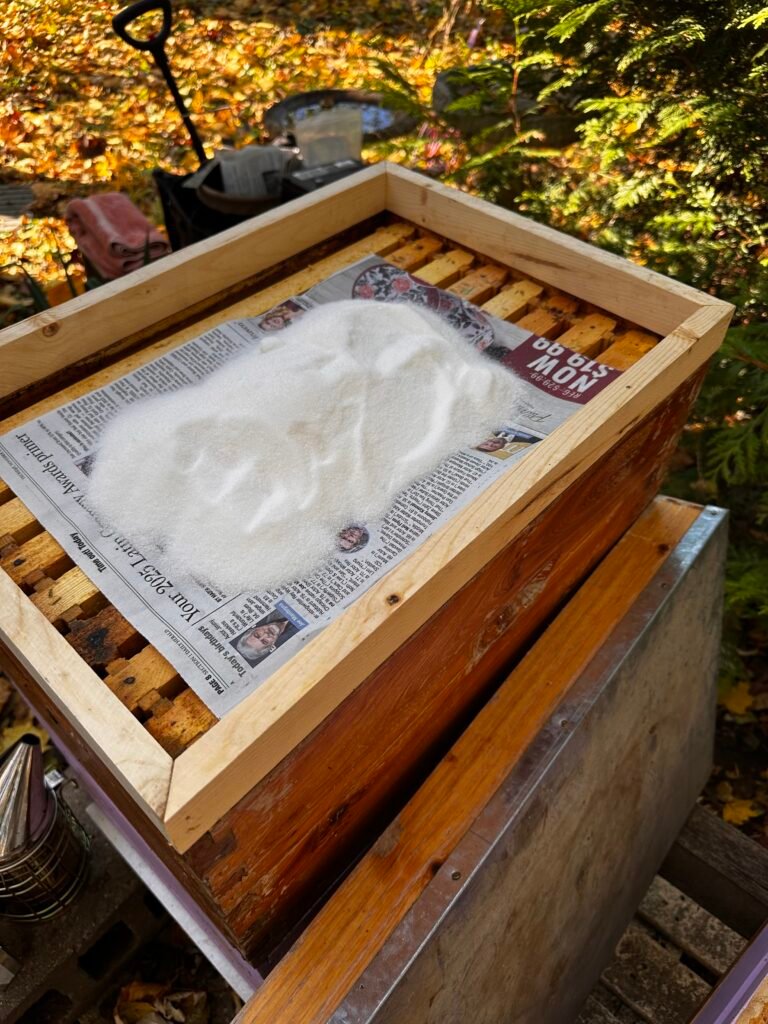
The newspaper should be just big enough to cover “most” of the frames and not be hanging outside of the hive. Then the cover is put back on.
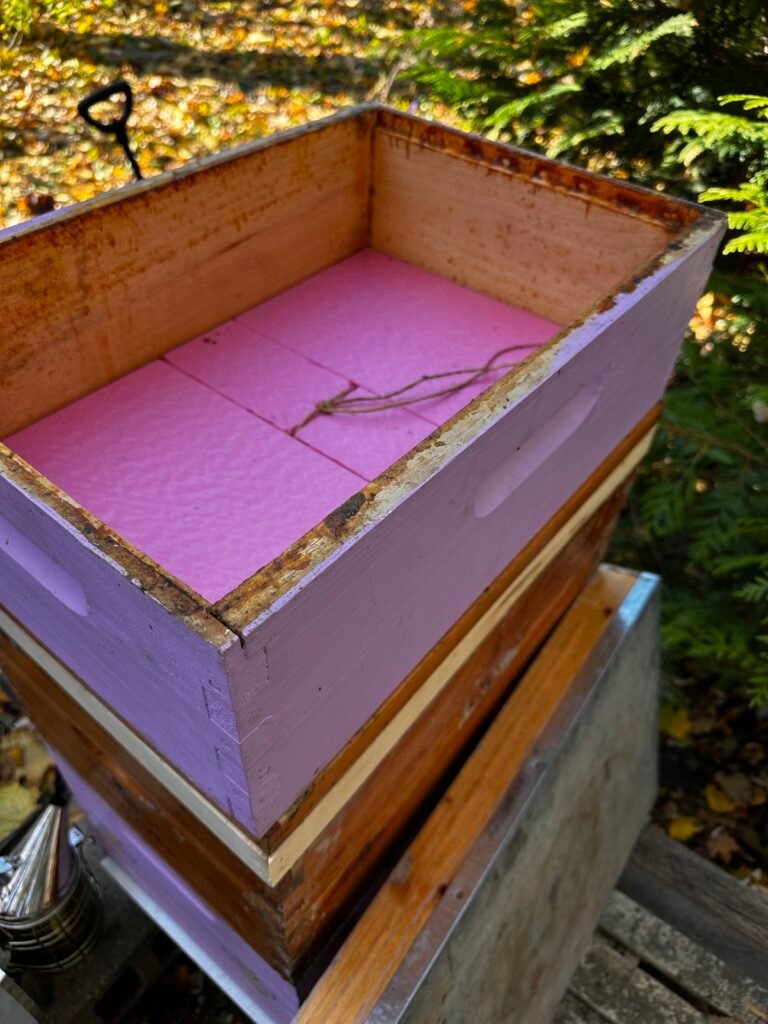
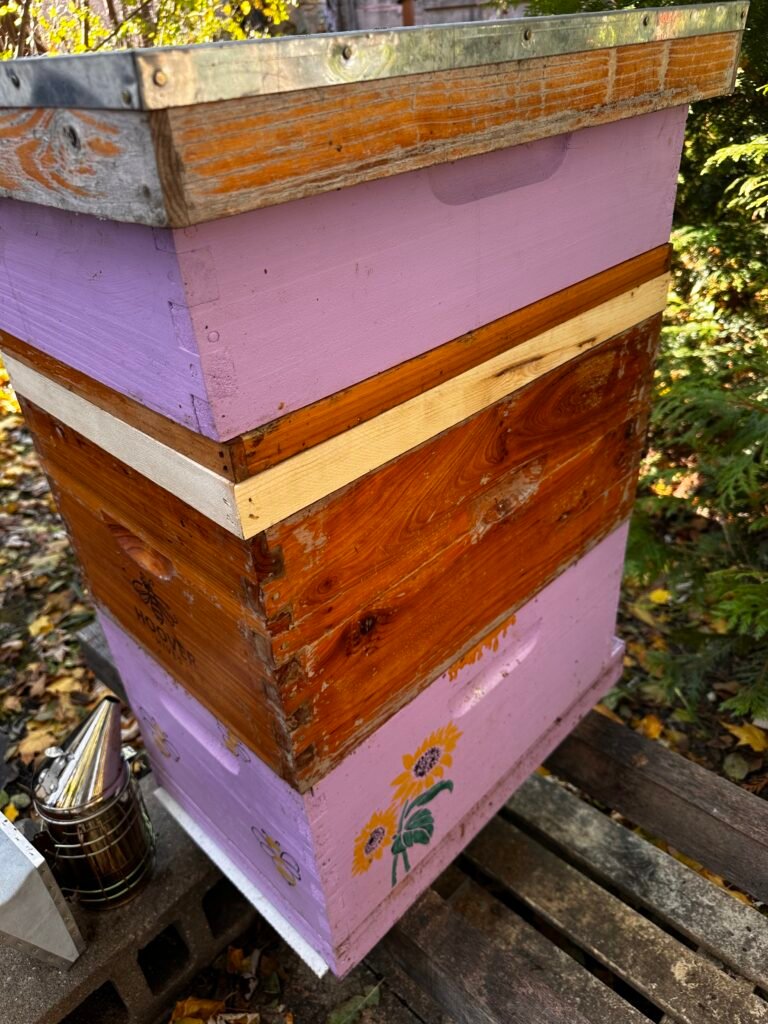
As winter passes, the moisture inside the hive is absorbed by the sugar. The benefit is twofold, it protects the bees from having moisture and condensation on them, and it provides up to a month’s supply of food for the bees. Which can be all the difference between starvation and making it through the winter. By the time spring comes the sugar will have absorbed enough moisture to harden it like a candy, making it easy for removing it.
I also like the idea that there will be something covering the bees to keep the cold winter air off them when I open the hive to check on them. Hopefully it adds a little extra protection. I have read that you can lightly spray the sugar with a light mist of water to dampen the sugar, causing it to form a crust. This will keep the bees from taking the granules out of the hive. And a little Honey-B-Healthy can add some fragrance to help them find the sugar above the newspaper.
The mountain camp method has been used by many beekeepers over the years with great success. I’m anxious to try it this year and see how it goes!
I’m curious if anyone has experience with this method (either positive or negative) and, if so, would you share in the comments?

Great idea! I think it makes sense.
Thanks for sharing the new info.