

Chickens are generally good at handling cold winters on their own, but for the ones that live in the north, where the climate is colder and harsher, winter preparation will help the flock get through the toughest winters safely.
As a native to northern Illinois, I have spent my life dealing with temperatures plummeting below zero degrees Fahrenheit, blustery cold winds, snow, sleet, and sometimes the polar vortex. We usually have some things that we do before the temperatures start dropping below freezing. Over the years I have had to put shrink wrap on my windows to seal the cold breeze out and clean out my heaters to make sure they’re working properly.
It is a good idea to do similar preparation for chickens to help keep them healthy in the cold winter months. Here is a list of the things my husband and I do to keep our chickens safe from frostbite in the winter.
6 Tips to Prepare For Winter
- Seal the coop
Look for any cracks or openings that are letting in drafts and seal them off. Our first year we went with a budget friendly idea and used empty chicken feed bags. We cut them open and stapled them to the walls like wallpaper and then shoved some hay between the wallpaper and the walls to insulate.
But don’t seal the coop completely. Make sure there is ventilation at the top of the coop to allow the moisture to evaporate out, without having a direct breeze on your chickens where they are roosting.
I will add a word of caution: Don’t use Styrofoam anywhere near where the chickens can reach it. Chickens love to eat Styrofoam! We found our flock snacking on it by day two and quickly took it down.
Instead, a great option is burlap. It breathes to allow moisture to evaporate out, and it does an excellent job at cutting the wind down.
- Ventilate the coop
You don’t want to have a direct draft on the chickens while they’re inside their coop, but you do need to have ample ventilation and air flow at the top of their coop to allow moisture to evaporate out. Proper air flow will also ensure better air quality by preventing ammonia build up in the coop from the poop.
- Cover their chicken run
Chickens can easily get frostbite on the toes from walking in the snow. If the snow on their feet melts, they now have wet feet, and that will unfortunately leave them vulnerable.
You can help avoid this by providing covering on their run outside to keep the snow out. We have been using 16 mil clear canopy tarp for several years now and it is holding up to all the weather throughout the year. If your chickens are free-ranging, then it would be helpful to put down some hay on the ground for them to stand and walk on.
- Heated waterer
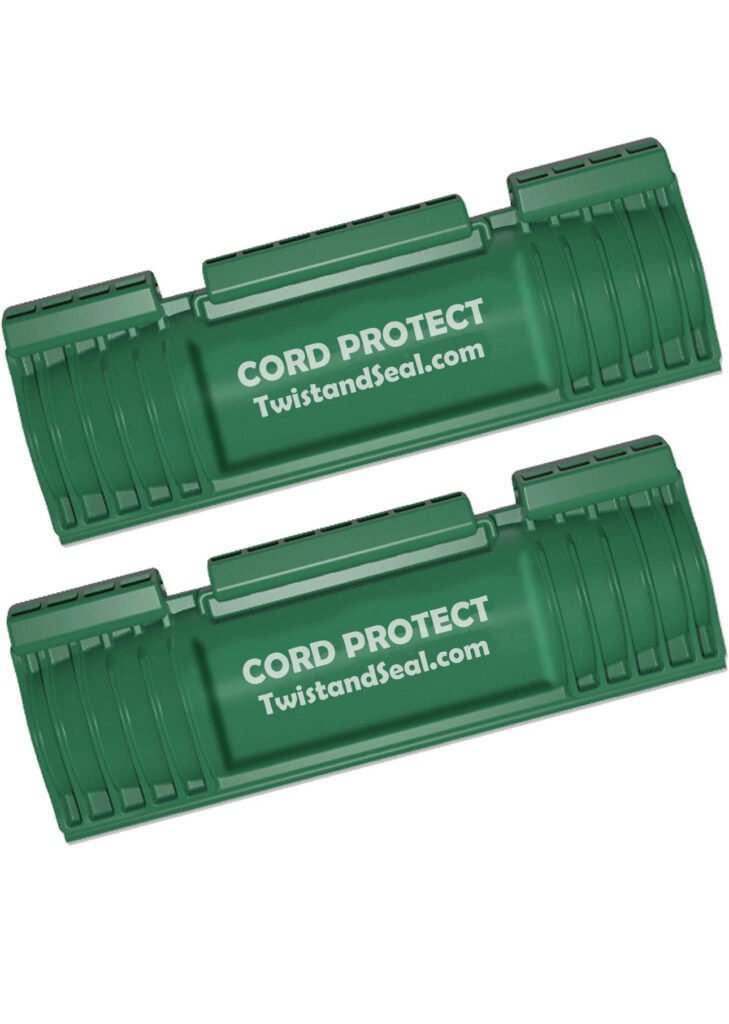
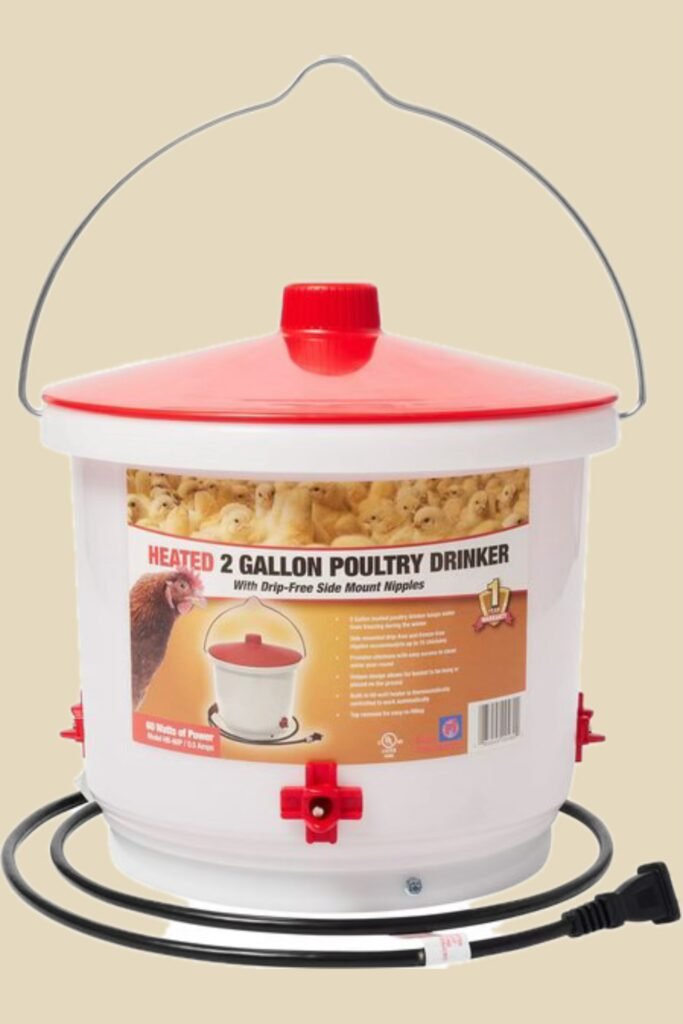
A heated waterer is ideal to prevent their water from freezing. They can still get dehydrated in the winter, so it is important to provide water for them. It’s best to avoid using bowls for water, because they have to drag their wattles in the water to take a drink, and wet skin in freezing temperatures leads to frostbite. A nipple style is best to prevent frostbite on their wattles from drinking. This one is my favorite heated waterer and has been reliable even at 12 degrees below zero. I keep it inside their coop since my flock usually stays in on subzero days, and it has worked reliably for several years now. You can use these cord protectors like the ones pictured here to keep the plugs safe.
- Heated brooder plate
It’s okay to use a heated brooder plate in the winter as it is generally safe. We have ours standing upright (like a wall) so they can stand next to it if they want to. Some people use heated lamps, but those are risky due to how hot they can actually get. If any of the bedding lands on it, or if it falls it can cause a massive fire, and potentially a devastating loss.
But chickens are pretty resilient in temperatures down into the 20’s. So, if your winter doesn’t get colder than that, then your chickens shouldn’t need a heat source, just a windproof coop. After all, they are covered in a downy coat.
- Bedding on the floor
Almost any kind of bedding will be okay to use on the floor inside their coop. The most commonly used bedding includes pine shavings, hemp bedding, hay and straw. Whichever bedding you choose, put several inches of it down on the floor to help keep the chickens’ feet warm and dry. Oh, and did I mention dry? It is an absolute must! There were a lot of posts on Facebook chicken groups asking for help with their chickens’ frostbitten feet. Many of them lost their toes. It can be prevented if you keep them dry, dry, dry.